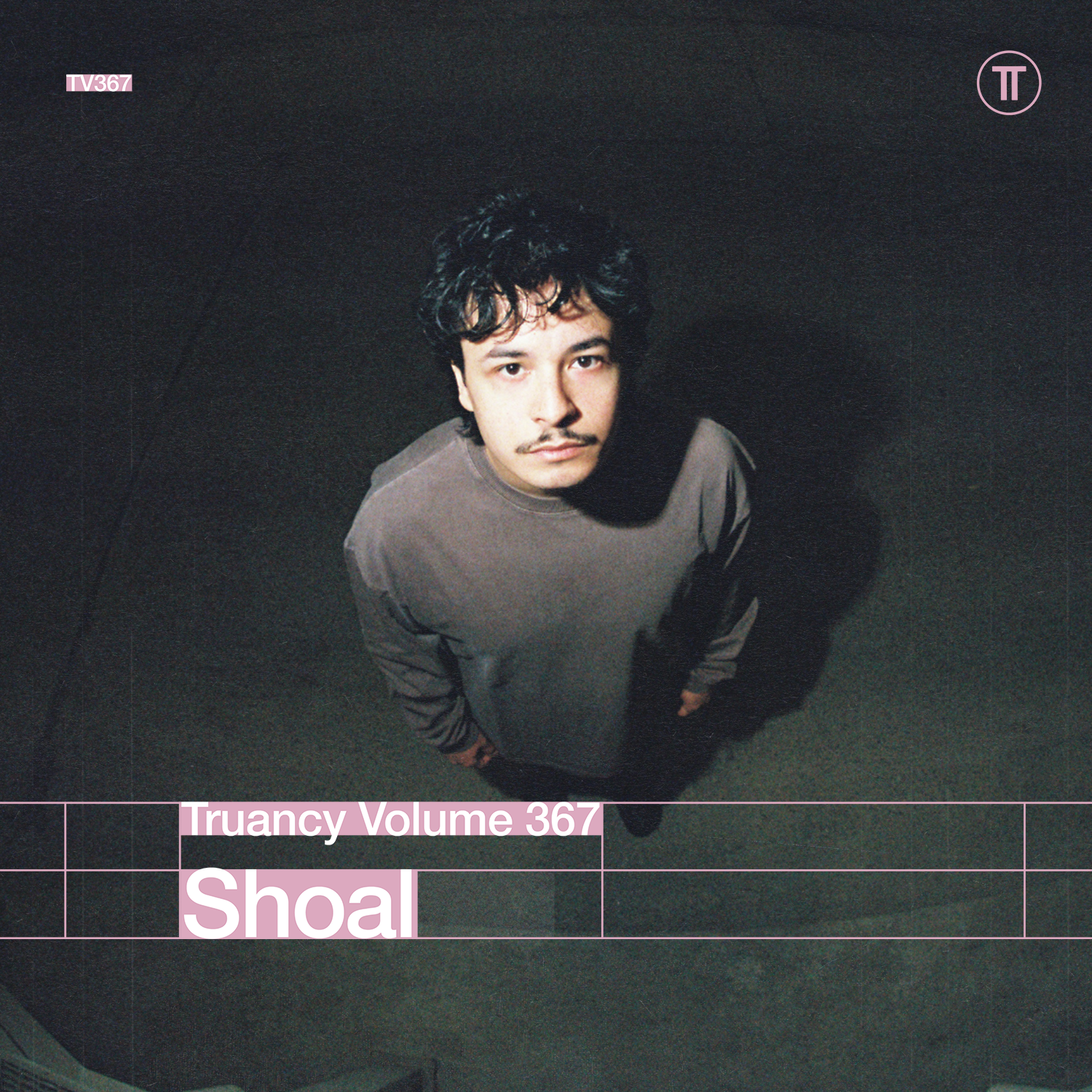
There’s a sense of physicality running through Shoal’s music. The project producer Kenny Kneefel sits somewhere between hypnotic techno, dub, sound art and improvisation, with sculptural sound design and raw synthesis giving his productions a distinctly tactile quality. Rather than settling into one particular lane, Shoal’s music seems more interested in what happens when rhythm, texture and space are pushed against one another. Originally from Oosterhout in the south of the Netherlands, Kneefel spent ten years in Utrecht, studying composition, sound design and live performance at HKU. The experience opened up a practice that extends well beyond the club, leading into field recordings, installations, graphic scores and site-specific performances. That wider perspective has remained present in his music, where intricate rhythms and deep organic pulses can shift from spacious and hypnotic to something considerably heavier.
His productions have appeared across a growing selection of labels including Spacelab, Harmony Rec, Animalia, Nowhere, Tikita and Konstrukt, while his collaborative work has seen him team up with artists such as techno favourite Polygonia. He also forms one half of Voal with Vand, a project born from years of shared studio sessions and jams that eventually became the Jinx and Saffron EPs on ISOTOOP. It’s through ISOTOOP that Shoal now returns with Interlocking, the label’s fourth release, out next week. Across three original productions, the EP further refines his muscular, hypnotic approach, moving between spiralling rhythms, overwhelming force and more restrained moments of tension. Antony Linell closes the record with a fitting reinterpretation of the title track.
For his Truancy Volume, Shoal brings together a wide-ranging selection of music, weaving together influences old and new with a handful of unreleased cuts of his own. The mix moves through the warped minimalism of Robert Aiki/Aubrey Lowe and Thomas Brinkman, to the more hypnotic jacking territory of Ion Ludwig and Forest On Stasys, driving through a selection of shifting techno for around 100 minutes. It’s a varied journey that pulls together music from all across his orbit, all folded together with ease and and a clear sense of club functionality.
Hey there Kenny, amazing to have you on the series! So how have you been recently? What’s the year been like for you so far? Any particular highlights you care to tell us about? Thanks for having me! It’s been a year of a lot of shifting around and new endeavours: I moved in with my lovely partner in Prague, exploring a new life here, joined the On Board agency, and I’m teaching more online music production lessons.
So as this is your first interview on site, I thought we’d just go back a bit. Could you tell us a little bit about where you’re from and what are some of your earliest musical memories, not necessarily in dance music? I was born in a small city called Oosterhout in Noord-Brabant, in the Netherlands, and my brother and I grew up in a culturally mixed family: my mother is from Andalusia, in southern Spain, and my father is from New Guinea, Indonesia. Even though these two cultures come from different parts of the world, I learned at a young age that both place a high value on strong friendships and family bonds, hospitality, and gatherings for celebrations. I’d say my earliest musical memories were those festive moments, where we’d listen and dance to a mix of Spanish flamenco and bulerías (Camarón de la Isla, Paco de Lucía), soul and funk, Funkadelic, Prince, and everything in between.
And when did dance music start to creep into your interests? I feel like the Dutch always have interesting back stories of raves or parties they went to that got them into DJing, do you have something similar? Or did that come much later for you? I was used to having a lot of different music around me as a kid, and I feel that experience led me to become the person providing the music. I saved up some money to buy a second-hand set of Pioneer CDJ-350s. That let me explore the craft, practise, and, most importantly, play at my friends’ birthday parties. I was playing all sorts of music, as long as everyone was having a good time.
My curiosity in house, dub, and techno grew when I started exploring SoundCloud, Discogs, and blogs like mnml ssgs. The local bars in my hometown weren’t that interested in this kind of electronic music, so I had to look elsewhere. The biggest cities near my hometown are Breda and Tilburg, and Breda was the one I was most familiar with. There, I got close to a crew doing house and techno events who were bringing new life into a small club formerly known as “Spock,” located within De Graanbeurs, a bigger nightlife venue. Spock was one of the few spaces in Breda in the ’90s dedicated to house, techno, and trance. This tiny space was also a career starter for Dutch trance DJs Tiësto and Cor Fijneman. It officially closed in 2008, and this young crew reopened it in 2015 as “Club Spock.” I spent a lot of nights there as a visitor, and it’s where I developed my DJing further, leading to my first all-nighter.
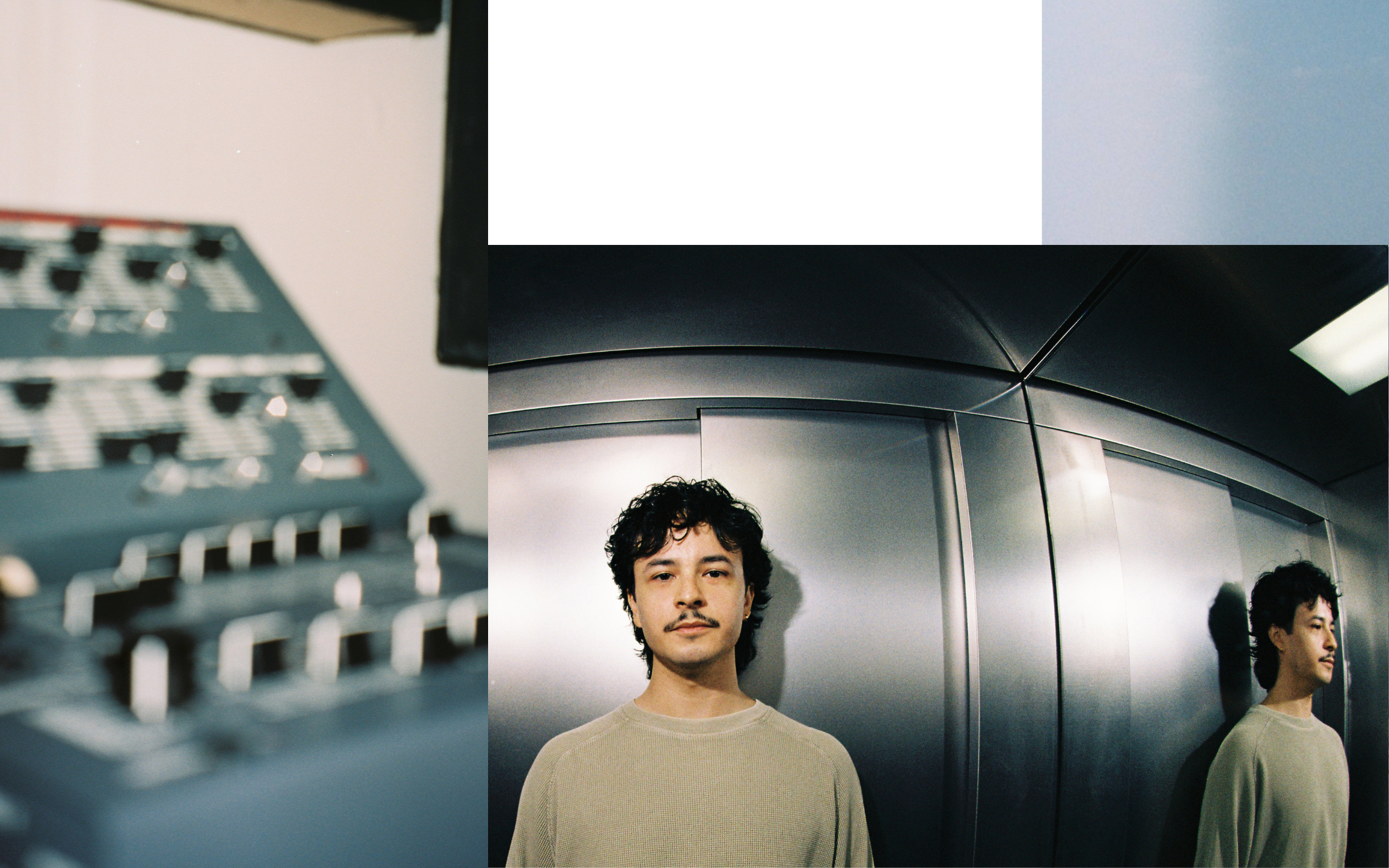
What can you tell us about heading to the University of Arts Utrecht (HKU)? What were those years like? First, I studied music production at the Herman Brood Academy. After that, I wanted to explore more directions and possibilities with sound, so I applied to HKU, where I dedicated my studies to different forms of composition, sound design, live performance, and sound art.
The first year was the most intense; even though it’s the introductory phase of the bachelor’s, it served as an exploration and testing period, both to see if the study fit and to bring all students to a benchmark level. The following years were more about learning different techniques and methods, and expanding the toolkit I could bring into my own practice and projects. It was a humbling experience. What I really enjoyed was being surrounded by so many different creative people; you feed off each other’s creativity. It was easy to collaborate, discuss, share ideas, and learn different perspectives.
You’ve mentioned that studying at HKU opened your interests beyond the club environment and towards multidisciplinary work. Was there a specific moment or project where you realised sound could exist outside of the traditional club format? Not necessarily a specific moment or project, but more a realisation that came from playing around with a field recorder. It makes you step back and listen carefully to your surroundings; you realise sound is already around us, all the time. Listening back to field recordings can teleport you right back to a specific moment and place. That’s when I realised that experiencing sound goes far deeper than we usually think.
You’ve worked across a number of different formats outside of the club environment, including installations, graphic scores and site-specific performances. What draws you to these kinds of collaborations, and how does working with visual artists or different disciplines change the way you think about sound? What draws me most to these collaborations is the chance to connect with another person, to stay open and learn from how they see the world. Music becomes one language among several: visual art, space, text, movement. Working across those languages forces a kind of translation, and that exchange is where the interesting ideas usually come from.
It doesn’t change what sound means to me so much as how I approach making it. In the club, sound often works on its own terms: rhythm, energy, the room, the night. Outside of that context, sound has to share space with something else: an image, an architecture, a score someone else has written. I have to think about how sound behaves next to another discipline’s logic, rather than only its own. That’s less a change in my relationship to sound and more an expansion of the vocabulary I use to work with it.
So you had two great releases on Animalia and Spacelab last year, and you recently announced your new EP Interlocking on your own label ISOTOOP, which is out at the end of the month. What can you tell us about the three tracks that make up the EP? What sort of period were you in while creating them, and were there any particular experiences, changes, or ideas that shaped the direction of the record? I like to confine myself to one piece of gear, a specific method, or a set of rules when working with sound. The EP started with the title track “Interlocking,” created in 2023; Viktor and I both agreed this one should be my first solo EP on ISOTOOP. It began with one piece of gear, the Lorre Mill Double Knot V1, trying to get as much as possible out of the machine. After collecting a bunch of sounds, I’d puzzle everything together into a sketch, then add the necessary elements to turn that sketch into a track. The other two tracks are built around the same concept: “Strange Blue Knots” started with the PsyCox Syncussion, and “Roxellana” with the Soma Pulsar-23.
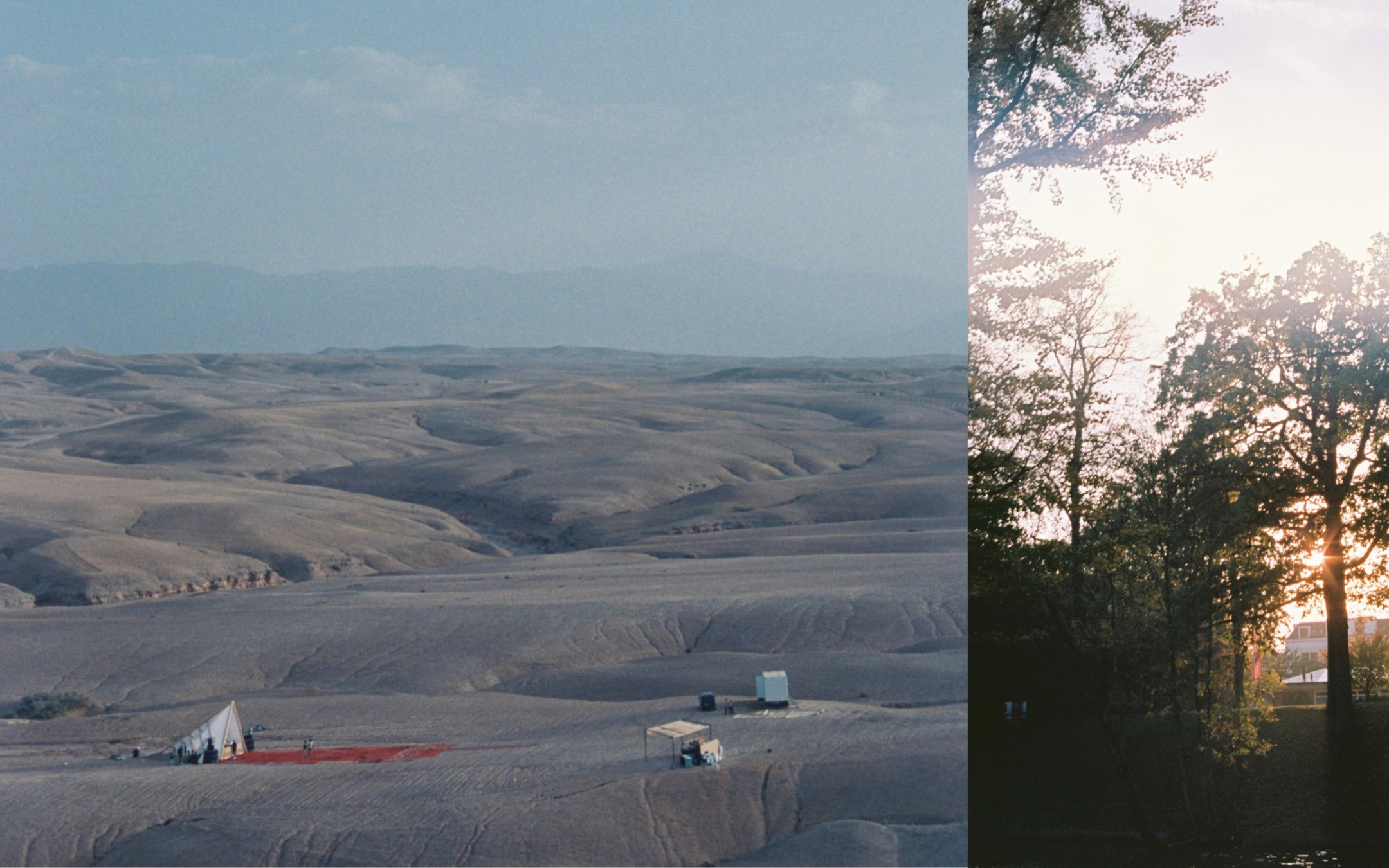
Have you been able to road test the tracks yet in any memorable places or settings where they’ve translated particularly well? “Roxellana” fit really well during my closing set at Contrarium at Lofi, hosted by the amazing Lumus Instruments. It was the last night of the three-day Contrarium live AV series, where light is sculpted through space and interacts with sound. The first two nights were seated live performances, while the last night was the same setup but built into a club setting.
Can you tell us a little bit about your development as a producer from when you first started to where you are now? Looking back, how has your approach to making music changed over the years, do you find yourself starting from a technical idea and building outwards, or does the emotional and creative direction usually come first? How have you found the balance between the two? What got me into production was the music itself: hearing tracks and getting curious, almost obsessed, with how they were made and how they created “that energy.” In the beginning, it was mostly about learning the tool; I spent a lot of time just figuring out how a DAW worked. As that became second nature, I could translate the ideas in my head much more directly. Now I spend a lot less time thinking and a lot more time doing and following the process.
A DAW is overwhelming precisely because the options are infinite, and I think that’s the trap for a lot of producers. What’s helped me is confining myself to a set of rules or limitations when working with sound; limitations force me to simplify and actually listen, and I end up getting more out of less.
As for balancing the technical and the emotional, I try to keep them separate, at least in terms of time. I’ll spend a few hours jamming, collecting sounds and following instinct with no technical pressure. Then I switch into technical mode: how do I get the most out of this sketch, and how does it come together through mixing and editing.
One moment that’s stuck with me happened during my time at the Herman Brood Academy. My mentor, Nathan Kofi, told me to try limiting myself to one drum machine only. He said something like, “If you think about it, a drum machine is built with an intention; its elements are carefully put together.” That reframed limitation for me, not as a restriction, but as its own internal logic I could learn from. It’s stayed with me ever since.
On the more technical side of production, can you think back to any eureka moments you’ve had since first learning how to make music? Maybe a technique you discovered, workflow, or synth you’ve mastered that completely changed the way you create and became something you still return to today? This ties into what I mentioned about limitation: since I started entirely inside a DAW, the first piece of gear I got felt like a eureka moment. My father built me a DIY kit of the PsyCox Syncussion clone, and it’s never left my studio since. Beyond the sentimental value, it let me step away from the screen and physically engage with sound.
That physicality gives different results than a DAW: happy accidents, imperfections that become character, and over time, muscle memory. Twisting a knob and reacting in real time is a different headspace than programming something in a DAW.
What can you tell us about your VOAL project? It’s a collaborative project alongside Vand, which you’ve described as being on the slow burner since 2019, but you’ve already had two incredible releases on ISOTOOP. Can you tell us a little bit about the history of the project and how you first started working together? You were both connected through studying at HKU right? I met Viktor at the second edition of Paral•lel festival in 2017, through mutual friends Ben Buitendijk and Helena Ho (formerly known as Van Anh Ho). Helena was running the ISOTOOP events at the time: Sunday ambient concerts at Mono Rotterdam, club nights in Rotterdam, and even a festival in Morocco. We all became close through those events, and I ended up joining the team.
Viktor and I started to meet up more frequently. We were going back and forth between each other’s studios, and by 2019, it was clear we should do something with all the jams we’d been building up. I remember Viktor mentioning he was thinking about moving out of Amsterdam; I told him I’d let him know if a room opened up in our house in Utrecht. Viktor moved in in 2021; we started sharing a studio, sessions became more regular, and over time we built up a lot of music together.
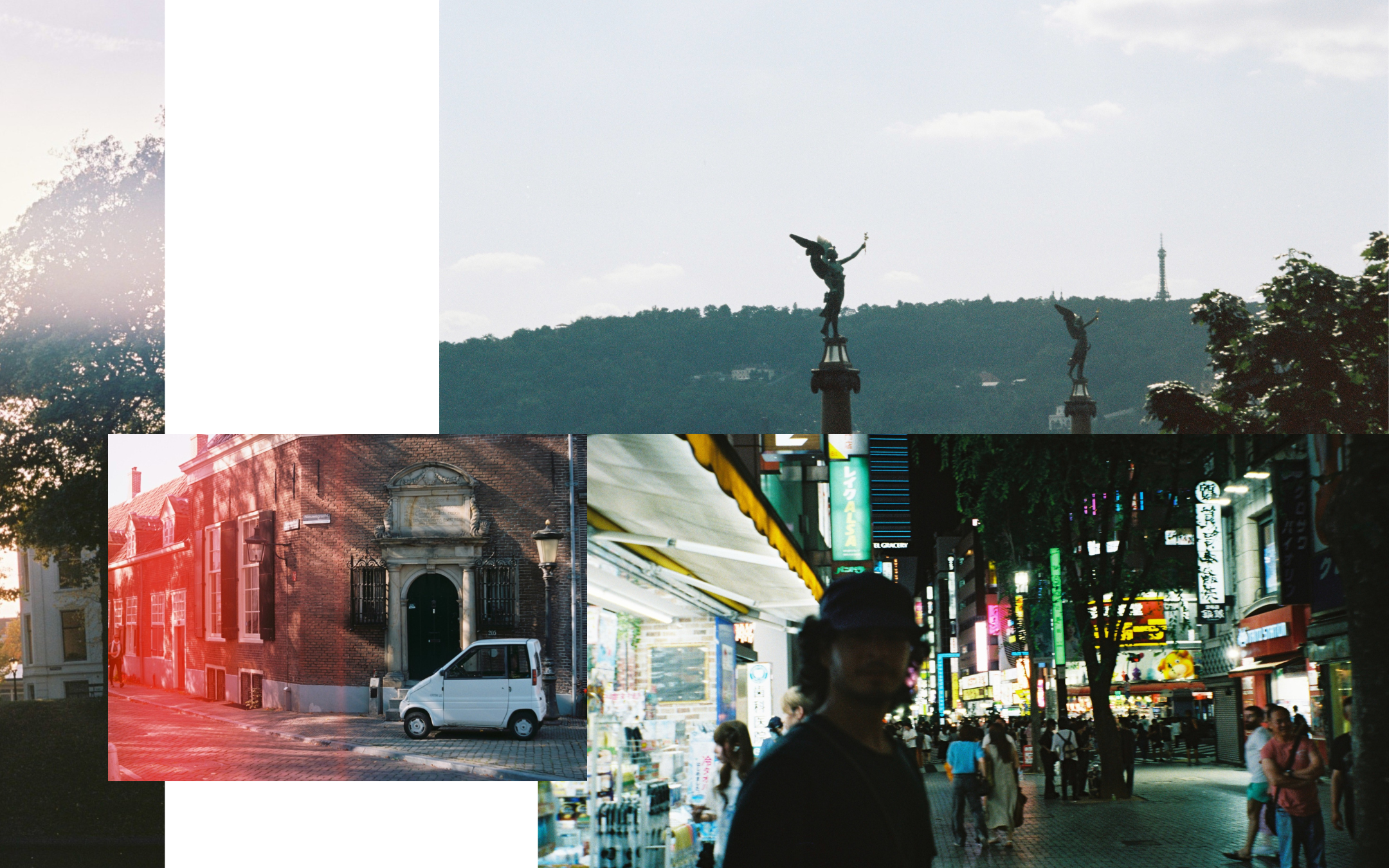
Collaboration seems to be a big part of your practice, whether that’s with other musicians or artists from different disciplines. What do you find changes in your own creative process when you’re working alongside someone else? Does another perspective often take the music somewhere you wouldn’t have reached alone? It absolutely takes you somewhere you wouldn’t reach alone. Collaborating brings a degree of surprise, an unexpectedness that’s hard to manufacture on your own. It teaches you to actually listen to what the other person is doing and react to it, rather than just executing your own idea. Sometimes doing nothing is also an answer, allowing yourself to listen and let the music speak, rather than filling every space.
It’s a different mode than working solo. On my own, I like to confine myself; the limitation is something I set for myself. In a collaboration, the limitation becomes the other person; you’re reacting to their choices, their sounds, their instincts, and that pushes the music into places neither of you would land on individually. That’s really what happened with VOAL: years of reacting to each other in the studio before either of us thought about releasing anything.
You’ve been on the road a bit with your own live set. How do you approach building a live set, and how much room do you leave for improvisation and unexpected moments when performing? Can you run us through maybe your recent Stoorlab live set? Recently, I’ve been incorporating more improvisation into my live sets. The STOOR PINKNOISE show was a great example of this approach. My computer runs Bitwig, which contains pre-recorded loops, studio jams, and a collection of fixed sounds and moods. The rest of the performance is live: the Octatrack serves as a drum machine and sends MIDI to the MakeNoise 0-Coast, which is processed through the Strega. While I trigger different sounds and moods from my laptop, I also respond and improvise on top of them.
The push toward improvisation comes from wanting the happy accidents, the imperfection, the raw, uncut feeling of actually playing. At STOOR, that got tested in a way I didn’t plan for. Right before I started, the MIDI signal wasn’t coming through properly between the Octatrack and the 0-Coast, something I hadn’t encountered in the studio. It caught me off guard, and there was nothing to do but wing it. Stressful, yes, but that’s part of what “live” means to me: the decisions that came out of working around it in real time weren’t something I could’ve recreated any other way.
Coming from Utrecht, how has your environment shaped your development as an artist? Do you think being surrounded by other disciplines and artists has influenced the way you approach sound? The house I lived in in Utrecht shaped me a lot as an artist. We lived there with four people, all doing something within the music industry, and that stayed true every time someone new joined the house too. We had one tradition that never changed: we always had dinner together. It was our moment to wind down, share experiences, have endless discussions, and share and listen to music. Feedback was never far away, literally in the next room. That bubble was strong, and honestly it was the core of it more than Utrecht as a city on its own. So many ideas got shaped over those dinners.
We’d also regularly invite other producers and musicians over; the studio doubled as our guest room. It always started the same way: dinner together first, hanging out, and most of the time ending up jamming. What came out of it most meaningfully wasn’t necessarily a specific track, but the connections: new collaborations and ideas that started right there in that house.
What does the dance floor represent to you now compared to when you first started going out? What sort of experiences and flow do you seek out via your DJ/live sets or someone else’s when watching? For me, the dance floor represents a place of being in the present moment and connect. That’s been true both when I first started going out and now; it’s always been about connecting with the people in the room and sharing music. Being present means losing the sense of time, a release both physical and mental. I think that feeling goes all the way back to those nights at Club Spock, and even further, to the gatherings and celebrations I grew up with; music was always tied to that same sense of enjoyment with the people around you. As a producer, I also get inspired there, both by specific sounds and tracks that spark ideas, and by the collective energy of the room.
My live sets are quite different from my DJ sets. The live sets are somewhat a peek into a specific time within my musical process: raw, uncut fragments coming together in the moment, playing, stitching it together as I go. DJ sets are more a reflection of the music that inspires me.
When I’m watching someone else, what I really enjoy is unpredictability in the selection while still being able to control the energy in the room. That balance between surprise and command is what keeps me locked in.
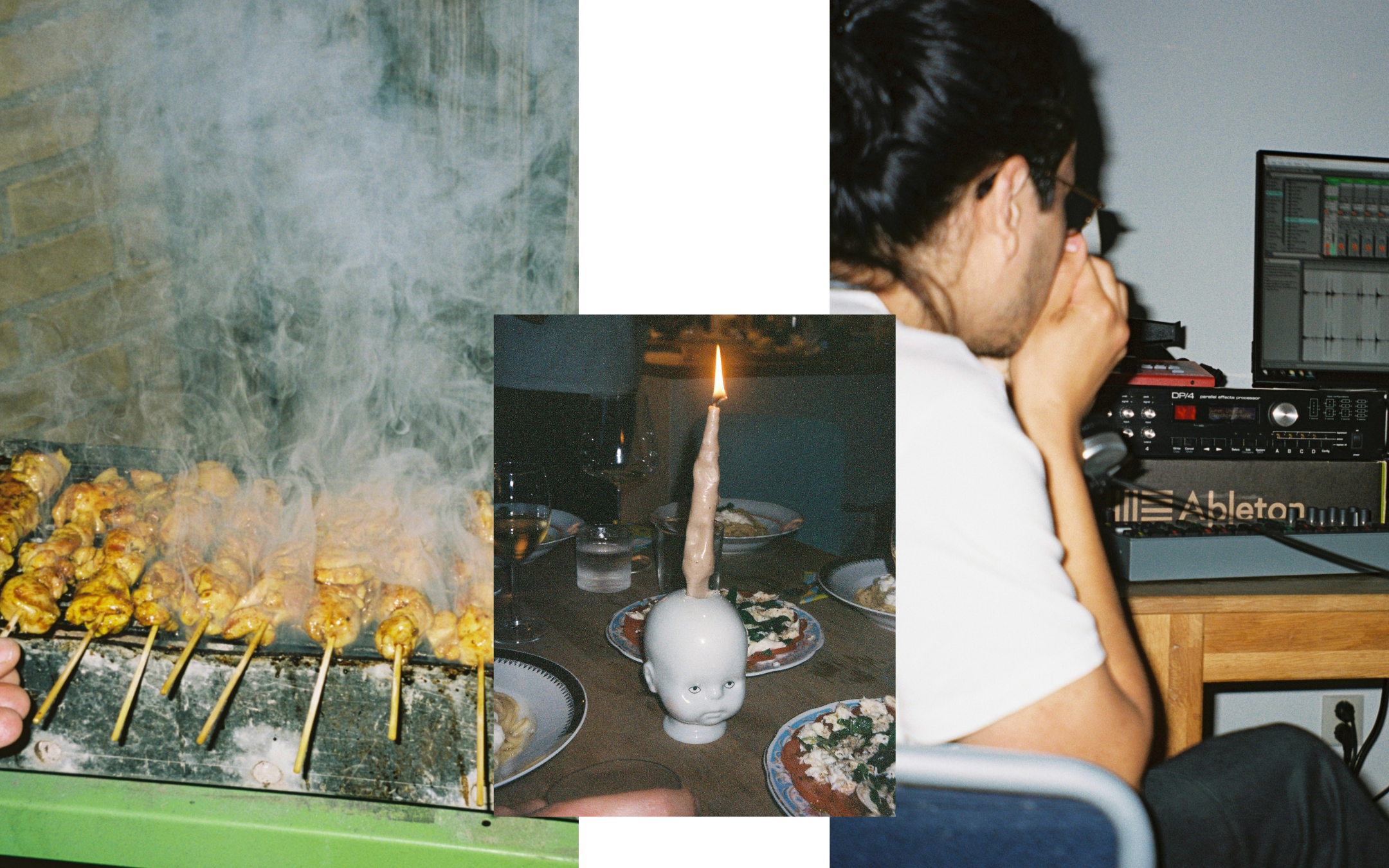
What sort of other hobbies or interests do you have outside of electronic music? Are there any books, films, shows or other things you’ve seen or been reading/watching that you might want to share? Things that influence you as a person outside of music? I’ve always considered food and cooking as another passion next to music, and the two are very much intertwined. Both bring people together; they connect, they tell stories; they’re both universal languages. Like in many other cultures, hosting and hospitality are strong traditions in both Spanish and Indonesian culture, and that’s really where the connection lies for me: it’s about that shared spirit of bringing people together, the same spirit that’s at the core of music for me. It’s the same instinct that made those dinners in the Utrecht house so important, cooking and hosting as a way of creating space for people. Outside of that, I also really enjoy teaching music production; passing on what I’ve learned has become a meaningful part of what I do.
What was your approach to crafting your Truancy Volume mix, and are there any particular tracks that hold special significance for you? For the mix, I aimed to showcase some forthcoming music and tie it together with music that inspires me. It’s a blend of old and new.
Looking ahead, what territories, musical or otherwise, are you eager to explore in your upcoming work? What are you looking forward to most now for the rest of 2026? Looking ahead, there’s a lot to anticipate. Musically, I don’t want to give too much away, but there are new releases planned for ISOTOOP, and I’m really excited about a remix I did for Control Freak Recordings. Additionally, together with Vincent Rang, we’re developing an exciting new iteration of Arbor. This sound art installation will soon be on display in Amsterdam.
Last, usual question from us, what was the last thing to put a big smile on your face and when was the last time you had a proper dance? The last thing that put a big smile on my face was camping with my partner in the forest and waking up to a sunny morning. My most recent proper dance was at my friends Ella and Pablo’s wedding. After the ceremony, they organized a lovely two-day festival.
Shoal: Soundcloud, Instagram, Resident Advisor
Shoal – Interlocking (ISO004) – Release Date: 27 August 2026
You can download Truancy Volume 367: Shoal in 320 kbps and view the full tracklist on Patreon here. Your support helps cover all our costs and allows Truants to continue running as a non-profit and ad-free platform. Members will receive exclusive access to mixes and tracklists. We urge you to support the future of independent music journalism—a little goes a long way. If you need any IDs though, please leave us a comment on the Soundcloud link and we will do our best to get back to you with the track ID :)