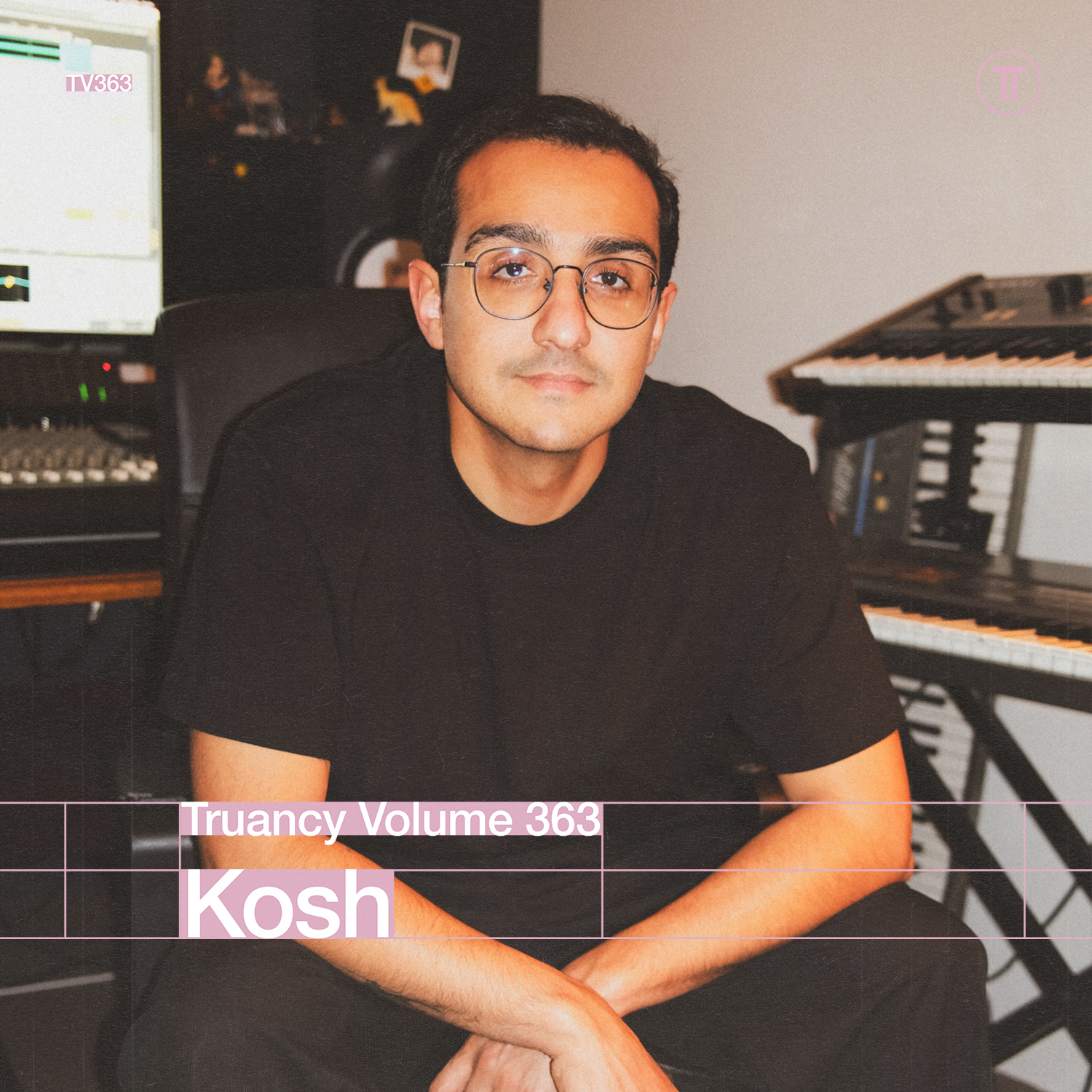
Few artists emerging from North Africa have carved out a path through contemporary club music quite like Kosh. Born and raised in Casablanca, the producer has spent the past decade steadily shaping a sound that pulls equally from electro, acid and techno, and house while remaining unmistakably his own. Early releases through the influential Moroccan imprint Casa Voyager he helped run, established him as a key figure within the country’s growing underground, contributing multiple EPs and appearances across the label’s various artist series. Since then, his catalogue has expanded to include standout outings on labels like Kalahari Oyster Cult, Craigie Knowes and 20:20 Vision, each release packed with fast-paced club weapons, cosmic electro explorations and snarling acid lines that speak as much to Detroit futurism as they do to the raw immediacy of contemporary dance floors.
In recent years Kosh has stepped into a new chapter with the launch of his own label, Convergence, a platform reflecting the full spectrum of his musical instincts and offering a dedicated home for his productions. The label is now three releases deep, with The World Inside, Square One and Enslaved already outlining its sonic identity. If the records established his sound, it’s on stage where Kosh has built his reputation even further. While many producers split their time between DJing and production, Kosh has long committed to performing live, turning his catalog into tightly engineered sets that move with the propulsion of club music while retaining the spontaneity of hardware improvisation. The result has made him one of the most compelling touring live acts operating today. His contribution to the Truancy Volumes series captures that energy perfectly: a recording from recent performance at Mtkvarze in Tbilisi and drawn largely from unreleased material. It’s a dense, driving snapshot of an artist constantly refining his craft on the road.
Hey Youssef! Hope you’ve been well So just to start, how do you look back on 2025? Do you have any particular highlights, be it both personal and professionally? 2025 was a pretty pivotal year for me, both personally and professionally. Musically, I had releases on labels like Craigie Knowes and Syncrophone, two labels I love. It was also quite an interesting year on the road. In August I spent about a month touring, which is always a special experience, even if being away from home for that long is becoming more challenging. One of the highlights was my India debut. I met some amazing people there and discovered a scene that’s growing really fast. We also had a great run with the collective RELOAD, organizing several nights in Morocco and around Europe, which helped strengthen the community and keep the momentum going. At the same time I spent a lot of time developing Convergence, both as a label and as a broader project. Overall, 2025 felt like a year of transition. A lot of movement, new encounters, and the feeling that things are starting to come together in a meaningful way.
So as this is your first interview on site, I thought we’d just go back a bit. Could you tell us a little bit about the city you grew up in and what are some of your earliest musical memories of maybe growing up there? I grew up in Casablanca, which is a pretty chaotic and energetic city, but also incredibly inspiring in its own way. It’s not necessarily the first place people think of when they imagine electronic music, but culturally it’s very rich, diverse, and open mind. Some of my earliest musical memories are from playing guitar as a teenager. I was in a few bands back then, and music quickly became the center of my life. We rehearsed all the time, sometimes even ditching school just to play together. The end-of-year school show was always a big moment for us, probably my first real taste of performing in front of an audience. When electronic music started becoming more central in my life, the scene in Casablanca was still very small then. There were only a handful of artists and almost no infrastructure for it, so we had to improvise a lot. We were organizing parties in places that were really not designed for DJ sets at all, places like Salle 36 at Boultek, BROCK, or live streaming sometimes in someone’s living room. At the time we genuinely thought we were doing something very serious and groundbreaking. Looking back now, it was probably pretty bad, technically and musically, but that’s also what made it fun. It was a very DIY moment where people were just experimenting and trying to create something from scratch. Casablanca itself is a city that teaches you resilience and creativity. There’s always noise, movement, contradictions. In a way, that energy definitely shaped how I experience music.
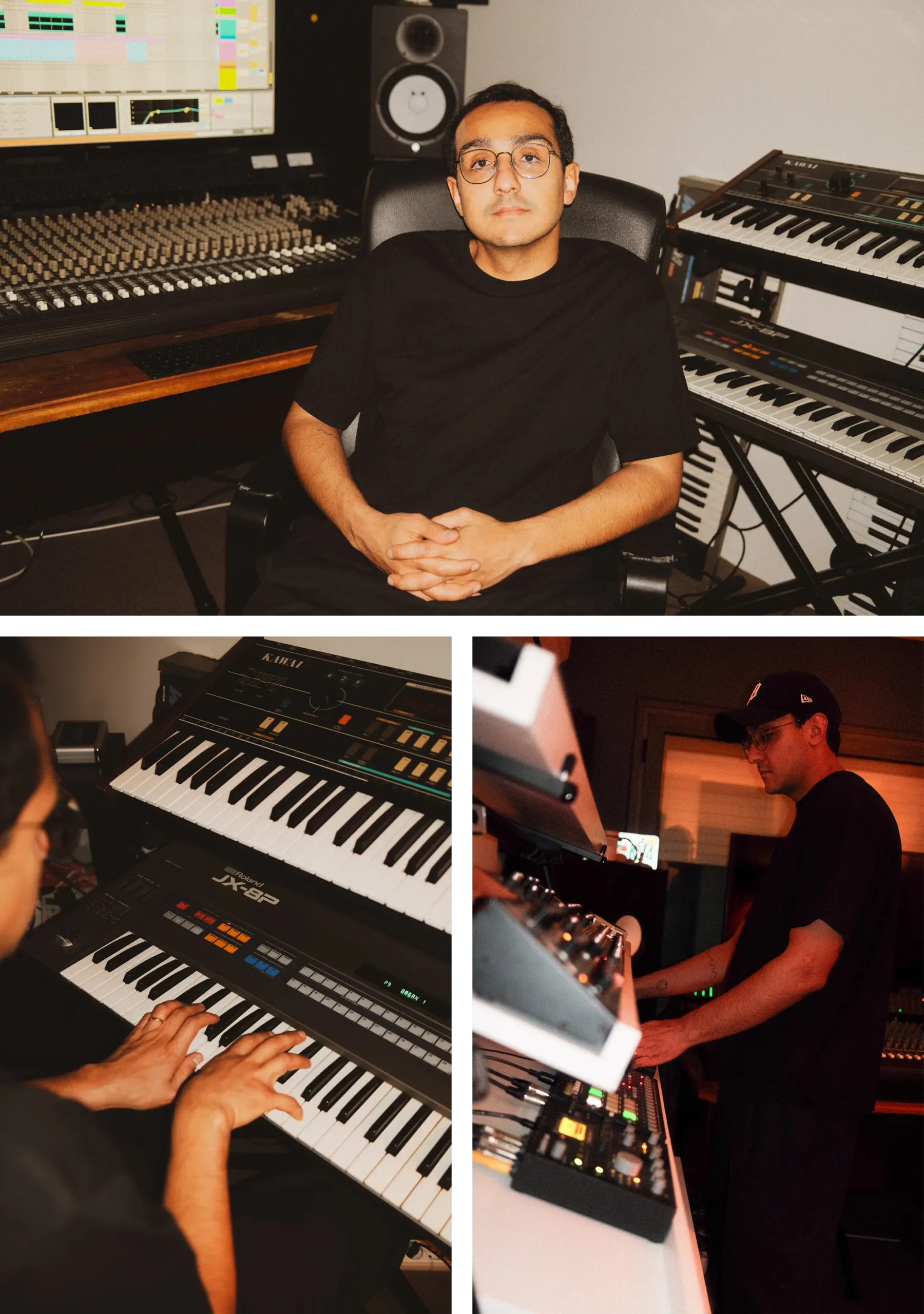
I understand metal and distorted guitars were at one point very important to you in your musical journey? Can you tell us about those times and what you were making? Do you think it had a long lasting effect on the way you approach melody in your music now? Correct! That was my first introduction to music, around 2002. I remember hearing the guitar on Chop Suey by System of a Down and being completely captivated. I was fascinated by that sound and kept wondering where it was coming from. Eventually I realized it was an electric guitar with some kind of effect on it. At that time YouTube wasn’t as big as it is today, so there was a lot of mystery around everything. Internet was very slow, and you didn’t have as many ressources as today. You had to figure things out mostly on your own, listening carefully, experimenting, and trying to replicate what you heard. From there, one thing led to another. I started learning guitar, got my first overdrive pedal, then a distortion pedal, and the rest is history. I was mainly into heavy and thrash metal at the time, bands like Metallica, Iron Maiden, Slayer, but also Pantera, Opeth, Slipknot, Dream Theater, and Steve Vai, etc. It was quite diverse, but overall very fast, very technical, very shredding and intense. Looking back, I think it had a big impact on how I approach melody and tension today. Metal music often plays with strong dynamics, quiet parts, explosive sections, dramatic builds, bridges, long solos, and I think that sensibility stayed with me. Even though the sonic palette is completely different now, the way I think about progression, emotion, and energy in a track probably comes from those early influences.
Could you next tell us how you first got into electronic music and DJing following that? I understand you were living in the US when your taste in techno and house properly matured. What were the initial influences, people, music that set you down this passion? Was there any one party or person you attended or met where everything clicked for you and you thought yeah I want to start making music. At the time I was still playing in bands, but it was often difficult to get everyone together to record their parts, especially the bass player and the drummer. So I started trying to do those parts myself. Someone told me about this software where you could program MIDI drum patterns and bass lines. That software was Fruity Loops. Around the same time a friend introduced me to trance and psy-trance, and I was already listening to things like Prodigy. In a strange way it had similarities with metal. The intensity, the drums, the energy. I started trying to recreate those sounds in Fruity Loops and slowly got hooked. I was basically making electronic music without even realizing it. I spent quite a few years producing before even thinking about DJing. DJing came later, almost naturally, as a way to play the music I loved and the tracks I was making.
Living in the US really expanded my perspective. I was based in Orlando but traveled often to New York, digging in record stores like Halcyon and A1. That’s where I discovered the New York and tri-state sound. Labels like Henry Street Music and Strictly Rhythm, artists like Kerri Chandler, and later people like DJ Qu, Joey Anderson, Levon Vincent, Fred P, Jus-Ed and others. Around the same time I also got deeply into Chicago acid, Phuture, DJ Pierre, Trax Records and the sound of the 303. My first hardware synths were actually a 303 clone and a 707. From there it was a natural step to dive into Detroit as well. That whole lineage of music had a different kind of impact on me. The sound was raw, emotional and musical, sometimes quite mechanical, yet still deeply soulful. They had a way of bringing together elements that aren’t necessarily supposed to go together, while still keeping a real sense of soul in the sound. Discovering those scenes really expanded my understanding of electronic music, its roots and its history. It became a big part of the foundation that still informs what I do today, even though I’m not pretending to have a sound that comes anywhere near that, or as good as that.
So what were the initial years like of you producing music? What were some breakthroughs for you in being able to get out the sound you wanted to? Any VST or synth that you just fell for and have used regularly in your music? At first it wasn’t all that serious. I was mostly messing around on the computer, trying to figure things out and understand how everything worked. I made a lot of pretty bad tracks in the beginning, like most people do. What really helped me unlock the next level was switching to hardware. The limitations that come with hardware force you to work within those boundaries and actually be more creative. It also pushes you to really understand how synthesis works instead of just relying on presets. My all-time favorite synth is the Novation Bass Station II. It’s incredibly versatile, fat and crunchy at the same time. I just love how it sounds! It always seems to cut through the mix in a really satisfying way. I used it in almost all my tracks.
When did things start to feel real for you as an artist, whether that was your first proper booking, first release, or a moment where you felt people were genuinely connecting with what you were doing? Things started to feel real for me around 2018, when I released my first EP NULL 212 on Casa Voyager. Until that point I had been making music for years, but that was the moment when it actually felt like the music was leaving the studio and finding its way to people. Suddenly it was out there, living its own life, and realizing that an audience was genuinely listening was quite a special feeling. The record was astonishingly well received, which was surprising because we had made it without any expectations at all. Just for the love of music. That same year I played my first proper live performance at Oasis Festival in Marrakech, and that really glued everything together. It was a relatively early slot, so I wasn’t sure what to expect, but people showed up and the energy was incredible. That was the moment when the audience really materialized in front of me, and I could feel the support from the local scene. It was hearhwarming to see people connecting with my music. It made everything suddenly feel very real. It was a really special moment for me.
You’ve committed strongly to playing live rather than relying on traditional DJ sets. What did that decision give you artistically, and what does it take away, especially when it comes to touring, logistics and adapting to different club environments? As I mentioned before, my first love has always been making music. I spent many years producing before I even started DJing, so focusing on live performance felt like a pretty natural step for me. But it can be challenging. When you’re performing for an hour or two with only your own material, you really have to build the entire journey yourself: the intro, the transitions, the peak moments, the closing tracks. Every track has to carry its weight. A DJ can pull from an endless catalog of pristine music made by thousands of producers over the years, but with a live set you have to write them all yourself, which can be quite demanding. At the same time, it’s an incredibly rewarding process. When a live set really works and people connect with it, the satisfaction is on another level. It makes you approach production almost like composing for a performance rather than just making individual tracks. Of course there are drawbacks. Logistically it can be a bit of a nightmare. More gear, more setup time, more space needed in the booth, and sometimes club environments aren’t always perfectly suited for it. Some nights it works beautifully, others it can be more challenging. But when everything clicks, it’s honestly one of the best feelings in the world.
How has the live set evolved over the years from your beginnings? It definitely got more structured and more club-oriented. It was at first a bit all over the place, but with time I started thinking more about how it functions in a club environment, how the energy flows, how tracks connect, and how to connect and keep people engaged on the dancefloor. The setup itself also became much more compact. I used to play with a lot of gear, which isn’t always practical in a DJ booth. So over time I streamlined everything to make it easier for promoters and venues, and also more convenient to travel with. Now the goal is to keep the flexibility of a live performance while making sure it can fit comfortably into most club setups.
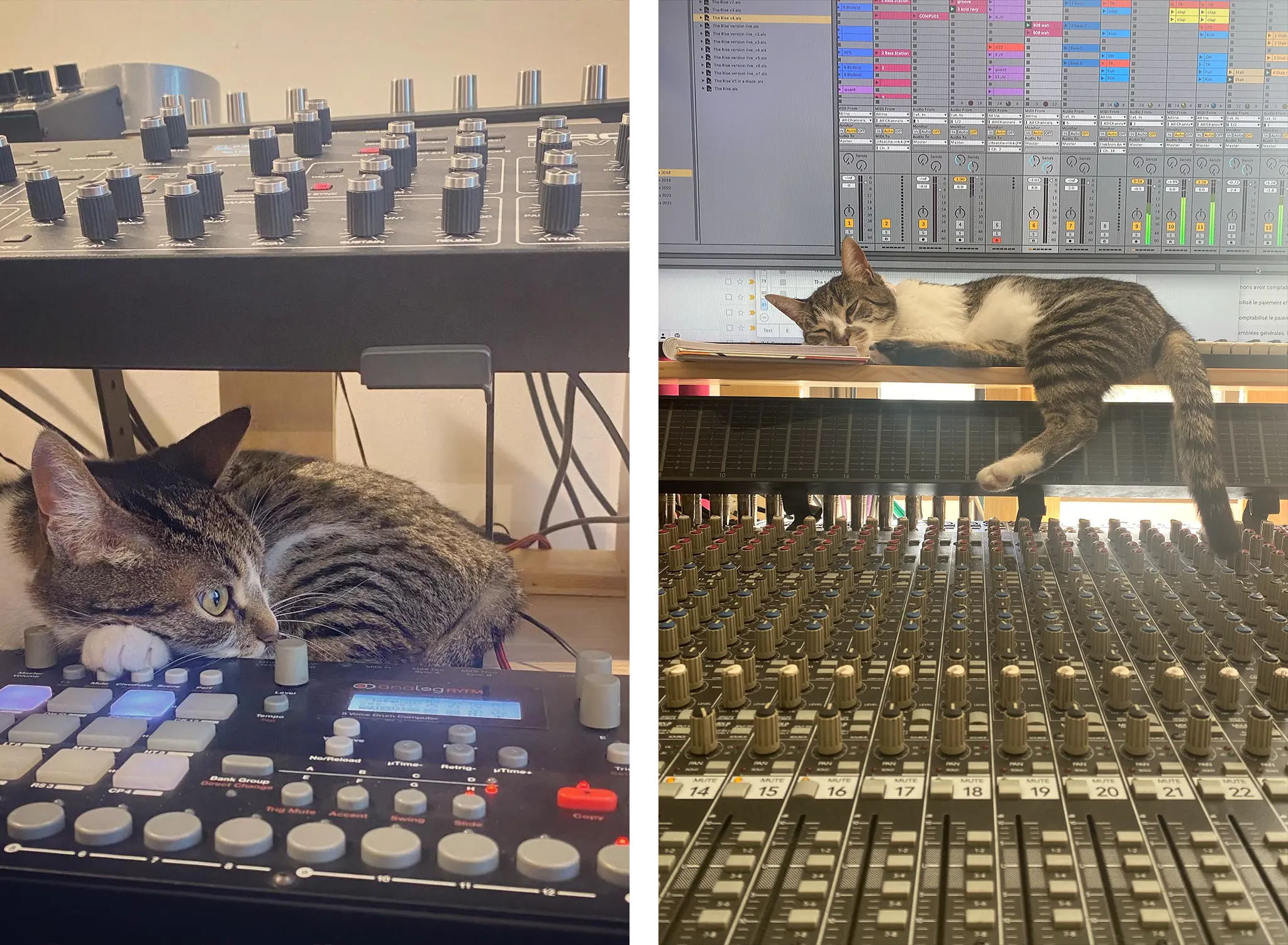
You’ve been back in Casablanca since around 2016, correct? How did it feel coming back after your time in the US, and how would you describe the state of electronic music in Morocco today? When I came back in 2016, things had already changed quite a bit compared to when I left around 2011. The scene had grown a lot. A few festivals had appeared, there were more DJs, more collectives, and generally more activity around electronic music. It felt good to be back because it felt like there was still so much to do and a lot of room to build things. Since then the scene has continued to grow even more. Sometimes not in the right direction, but overall people are becoming more mature when it comes to music, more aware, more curious, and generally more knowledgeable.
With the popularity of Oasis throughout the last five years, are you seeing an influx of foreigners to the scene? Oasis definitely played a big role in putting Morocco on the map. Over the years it helped showcase the country and the local scene to a much wider international audience. In many ways it really paved the way and brought a lot of visibility to what was happening here. Because of that, you do see more foreigners becoming curious about the scene, artists coming to play, people traveling to discover it. But at the same time the local community has also grown a lot. The festival helped open the door, but the scene itself has kept developing from there.
So let’s talk about some of your recent music from last year, as I loved both the Craige Knowes and Syncrophone record, especially how big the title track is on ‘Back on Track’. What sort of planning goes into writing a whole EP for you? I was really happy about those records, as both Craigie Knowes and Syncrophone are labels I deeply respect. Most of the tracks on the Craigie Knowes EP actually came from material I had written for my live set. I’ve been playing Ridge Racer for many years now, so that one had already been tested quite a bit on dancefloors. Back on Track was conceived exactly as that: a big track. I engineered it for the live set, with long build-ups, rising tension and different sections. It’s almost like several tracks packed into one. At the same time, the EP needed something a bit more laid-back to balance it out, and that’s where Breaksit came in. Curating an EP is always a bit like putting together a jigsaw for me. I usually make tracks without a very specific purpose, and later on, when it’s time to build the EP, I start selecting the ones that fit well together, the ones that make sense as a group and tell a story. It’s really about finding the right balance.
A lot of your music feels shaped by movement, between countries, scenes, and phases of life. Do you feel like certain places, periods, or memories still surface when you’re writing, even subconsciously? Absolutely. I feel like the music I make today is really the result of all the influences I’ve picked up over the years, the different phases I went through, the places I lived in or traveled to, and the scenes I was exposed to. It finds its way into the music in one way or another. Growing up in Morocco probably shaped that perspective as well. It’s a place where traditions and modernity coexist in a very multicultural environment, and that kind of contrast naturally spills over into the way I approach music. Even if it’s not always intentional, there are often small elements from different periods of my life that resurface when I’m writing.
Casa Voyager obviously has played a huge role in your journey and in the wider Moroccan scene. Looking back on that journey from the beginning, what did the label and collective teach you about collaboration, curation and building a scene from the ground up? I owe a lot to Casa Voyager, and I’ll always be grateful for everything it brought to my journey as an artist. It taught me a lot about patience and determination. Building something in a place where the scene is still growing takes time, and you have to stay consistent and believe in what you’re doing. It also showed me how important collaboration is. Nothing really happens alone, it’s about people coming together, sharing ideas, supporting each other and pushing things forward collectively.
More recently you’ve launched your own label, Convergence, with two THREE releases already out. What pushed you to start something new, and what kind of space or direction are you hoping Convergence will represent compared to your previous label experiences? I think the idea was always somewhere in the back of my mind. I even knew the name Convergence long before the label actually existed. At some point it just felt like the right time to finally bring it to life. First and foremost, I wanted a platform for my own music. A place where I could release things on my own timeline, with complete artistic freedom, without having to fit into someone else’s schedule or direction. But I also wanted it to be an outlet for friends and artists I respect. Sometimes that might be full EPs, sometimes splits, or other formats. The idea behind the name is really that, a point where different ideas, influences and people meet. A place where different energies converge. Ultimately I want it to be a space where I can express myself freely, without any constraints or expectations, from the cheesiest club anthem to the most obscure track. This year the vision of the label is really starting to come to life, with a few upcoming splits and full EPs from artists I respect and who I feel are pushing this sound forward.
What sort of other hobbies or interests do you have outside of electronic music? Are there any books, films, shows or other things you’ve seen or been reading/watching that you might want to share? I picked up surfing a few years ago, which I really enjoy, although it’s not always easy to keep up with it, as it is very time consuming. Recently I also discovered this French-Canadian band called Angine de Poitrine, which completely blew my mind. It’s hard to even describe what they do. Some kind of microtonal mathcore funk rock. One of them plays a custom hybrid guitar/bass with a bunch of pedals and a looper, building very tight layers live. The other one is on drums. The playing is incredibly precise but also chaotic in a really fun way. The whole thing is pretty absurd visually too. One of them has an upright nose and the other a floppy one. Someone in the comments described it as “humanity’s response to AI,” which I thought was hilarious but also kind of accurate. It’s messy, creative and unpredictable, and honestly really refreshing in this ocean of very polished, uniform, and sanitized music.
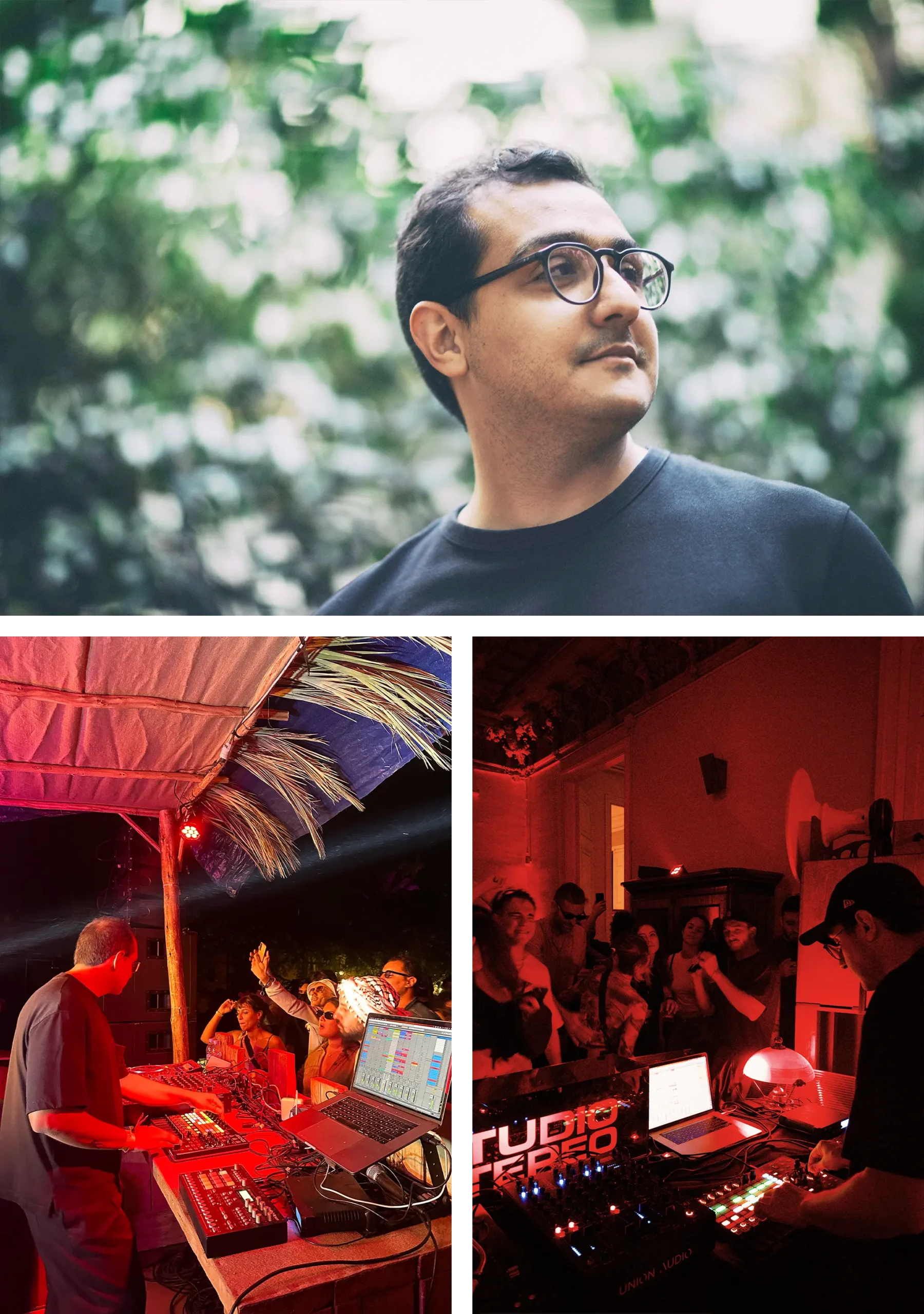
Can you tell us about three albums that a) define you getting into electronic music in general, b) maybe a midway album when you were fully invested in DJing and and c) a more recent one.
A) The Prodigy – The Fat of the Land
My older brother had this album on CD when we were younger and I remember listening to it a lot. It was probably my first real exposure to electronic music. At the time it just sounded completely different from anything else I knew, aggressive, energetic, almost like electronic punk. It definitely left a mark on me early on and got me into electronic music.
B) DJ Stingray – Aqua Team 2
This album completely blew my mind. There’s something about it that’s hard to explain. It’s raw, powerful, soulful but also very futuristic at the same time. The electro grooves, the speed, the energy… it just shreds. For me it’s really a masterpiece.
C) The Detroit Escalator Co. – Black Buildings
A good friend with good taste shared this album with me recently and I got hooked immediately. It’s such a beautiful record. Very atmospheric, deep and emotional, but still very rooted in Detroit’s musical DNA. It’s the kind of album you can listen to from start to finish and keep discovering new details every time.
Can you tell us a little bit about this live set and what went into preparing and performing it? This live recording comes from a set I played at Mtkvarze in Tbilisi, Georgia. I always have a great time there with the Mtkvarze team. The vibe is always on point and the place never disappoints. Definitely my favourite place. It was the first stop of a month-long tour, and most of the tracks in the set are unreleased, with some of them being played for the first time. I like testing new material especially in environment where the crowd is really receptive. The idea behind the set was to keep it quite diverse, moving through different moods, energies and textures while still keeping things tight and dancefloor-focused. I wanted it to be direct and punchy. Something that gets everyone on the same page quickly. I might have pushed the BPM a bit higher than usual, but it felt right in the moment.
Looking ahead, what territories, musical or otherwise, are you eager to explore in your upcoming work? What are you looking forward to most now in 2026? Lately I’ve been feeling like exploring deeper territories in my music, sounds that are less tied to the strict requirements of the club. Something more emotional and atmospheric, potentially something that could evolve into a full album. I’d also like to experiment with different approaches to composing and arrangements, making things a bit more linear and steering away from breaks and drops. I’m also contemplating getting back into DJing and taking a step back from live performances for a while, just to reset and reshuffle things a bit, and maybe focus on other projects.At the same time, 2026 is shaping up to be a big year on a personal level as well, as the family is getting bigger… that’s definitely what I’m looking forward to most :)
Last, usual question from us, what was the last thing to put a big smile on your face and when was the last time you had a proper dance? See above ☺It’s been a while since I’ve had a proper dance. Sobriety comes with price tag: you tend to spend less time in clubs. But I still enjoy the music just as much, just in a slightly different way these days.
Kosh: Soundcloud, Instagram, Bandcamp, Resident Advisor
You can download Truancy Volume 362:Eversines in 320 kbps on Patreon here. Your support helps cover all our costs and allows Truants to continue running as a non-profit and ad-free platform. Members will receive exclusive access to mixes and tracklists. We urge you to support the future of independent music journalism—a little goes a long way. No tracklist for this one as a live set from Kosh but any comments on our Soundcloud will be much appreciated!